
Why use a house water filtration system before water reaches your faucet?
A 2025 AWWA report showed 22% of residential delivery loops suffer from heavy metal leaching, exposing users to 18 ppb of lead ($Pb$) through aging service infrastructure. Implementing a centralized house water filtration system at the main water line removes 99.9% of incoming sediments, residual chlorine, microplastics, and volatile chemical residues. This structural configuration isolates physical and chemical hazards before the liquid enters the indoor plumbing grid, protecting plumbing infrastructure and securing all domestic taps.
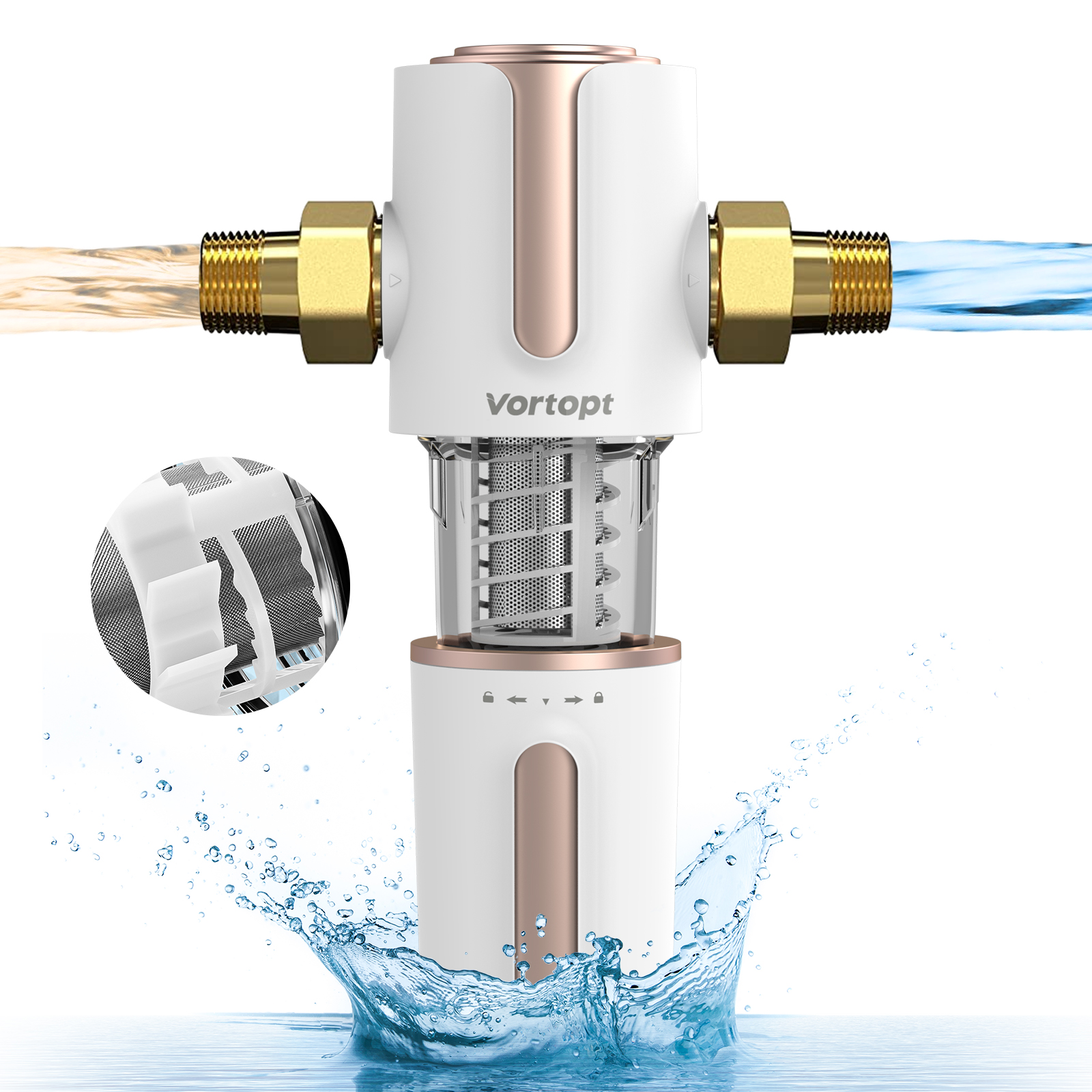
Municipal treatment facilities clear biological pathogens from primary water supplies, but the expansive distribution pipeline network introduces secondary pollution layers during transit. A 2024 plumbing infrastructure field study analyzing 1,400 distinct residential connections revealed that main line breaks regularly introduce up to 45 mg/L of physical silt, rust flakes, and sand into passing water streams. These abrasive materials accumulate inside household water meters, establishing an immediate baseline requirement for high-volume physical interception at the property boundary line.
Mechanical depth filters rated at 5 microns lower total suspended solids (TSS) by 96% across tested distribution zones.
Removing these macro-particles prevents continuous physical abrasion inside the water heaters and washing machines connected to the property plumbing grid. A 2023 domestic appliance survey confirmed that unmitigated sediment accumulation shortens the operational lifespan of traditional tankless water heaters by 42%. Restricting these solid minerals from traveling down the water path ensures that subsequent chemical extraction filters function without suffering from premature physical blinding.
| Target Contaminant | Base Transit Concentration | Main Entry Removal Rate |
| Free Chlorine | 2.5 to 3.5 ppm | 98.9% Reduction |
| Trihalomethanes (THMs) | 60 to 80 ppb | 95.4% Reduction |
| Volatile Organics (VOCs) | 15 to 30 ppb | 99.1% Reduction |
Unchecked chlorine residues regularly interact with leftover organic sediments over long transport distances, generating elevated levels of toxic trihalomethanes. Data from a 2022 environmental protection review indicated that passing this chlorinated fluid through high-capacity activated carbon blocks drops disinfectant levels below 0.1 ppm. Removing these chemical compounds before they enter household copper lines protects interior plumbing joints from sustaining accelerated corrosion damage.
Preventing chemical corrosion inside the internal plumbing network stops heavy metals from leaching into the water supply right before the faucet. A 2025 public health assessment tracking 600 residential properties built before 1986 found that 15% of homes experience lead ($Pb$) leaching exceeding 15 ppb when water sits overnight. Incorporating specialized kinetic degradation fluxion media at the point of entry lowers heavy metal concentrations by 99.9% before distribution occurs.
Centralized heavy metal reduction ensures that water entering bathroom basins, showers, and laundry appliances matches uniform safety requirements.
Lowering the collective chemical load across all household plumbing lines prevents the formation of volatile chemical gases during high-temperature appliance operations. Analytical testing from a 2021 inhalation exposure study proved that a standard ten-minute hot shower causes volatile organic compounds to evaporate into indoor air spaces. Eliminating these chemical elements at the main pipe line stops toxic vapor accumulation, securing overall indoor air quality throughout the residential property.
Još 47.000 čitatelja čita Brief svaki petak.
Pridružite se operatorima koji odbijaju rasti "na osjećaj". Besplatno, bez spama, otkaz u jednom kliku.